
Weekly Investment Insights
Key Observations as We Enter Fourth Week of Geopolitical Conflict
Key Takeaways:
- Observations as we enter week four of conflict.
- Some signs of capitulation but not enough.
- No changes to EPS or index targets due to conflict.
- Do not count on rate cuts in 2026.
- Valuations starting to look compelling but need to weigh fundamental risks.
Key Observations as We Enter Fourth Week of Geopolitical Conflict
As we enter week four of the conflict in the Middle East, we sympathize with investors that geopolitical conflicts create anxiety and fear, especially in an environment where the news changes rapidly due to social media. It is crucial to remain disciplined to your long term investment objectives. In fact, history suggests these situations can present buying opportunities. In this weekly, we offer market observations and the biggest economic risks we see in the near term.
Small signs of capitulation:
We look at many different factors to indicate if periods of market weakness may be reaching levels of capitulation. Our model is beginning to show initial signs that this is occuring but not enough to warrant adding significant risk at these levels. From a technical perspective, the S&P 500 relative strength index dipped below 30 last week (a level considered oversold) for the first time since Liberation Day (April 2025). The AAII Bear/Bull ratio has increased to the highest level in six months. However, while the VIX Index has increased to the highest since April 2025 (25), it is not at extreme levels. When looking at the percentage of stocks in the S&P 500 trading above their 50-day moving average, at 20% it does not look like a washout. Lastly, high yield spreads have not reached levels consistent with capitulation.
No changes to forecasts:
Despite words of caution from bank CEOs, current estimates for S&P 500 earnings and year end targets are unchanged since the conflict began. For example, according to Bloomberg, the median S&P 500 2026 EPS estimate before the Iran conflict (January) was $308, ironically as of March 18, it is $309. The median year end 2026 target for the S&P 500 was 7550 in January, it is still 7550 as of March 18.
Fed cuts unlikely in 2026:
At the beginning of the year, fed funds futures were pricing in three rate cuts in 2026. After the recent rise in oil and signs that inflation was ticking higher prior to the conflict, the Fed is unlikely to cut rates in 2026. Market expectations for inflation as measured by breakeven inflation rates are showing inflation over 5.0% in the next year.
Rates and gas may slow consumer and housing:
Given the rise in long term Treasury yields, mortgage rates are rising and may challenge the spring selling season. From a consumer perspective, gasoline prices have increased $1.18 per gallon since their January low. This is likely to weigh on consumer spending in the near term and is reducing the benefit of the favorable tax bill in 1H26. In addition, equity market weakness is weighing on the consumer wealth effect.
The Bottom Line
At this time, valuations are starting to look compelling in select areas of the global market (e.g., emerging markets, small caps). However, we are weighing better valuations with some fundamental changes (e.g., higher interest rates) to evaluate if there are opportunities that are fully reflecting the downside risk of a slower economy and higher rates.
LISTEN NOW: Markets With Megan
Your Economic and Market Detailed Recaps
- Inflation brewing before the Iran conflict.
- Fed leaves rates unchanged; expresses concern on inflation.
- Housing data mixed; mortgage rates rising.
- Global equities fall for third consecutive week.
- Treasuries sell off on inflation fears.
- Gold prices continue downward trend.
Weekly Economic Recap — Inflation Brewing Before Iran Conflict; Fed Hawkish
Homebuilder sentiment as measured by the National Association of Home Builders rose to a three month high in March. The biggest increase was seen in sentiment on prospective buyers’ traffic.
Pending home sales rose the most in three months in February led by sales in the midwest and south. The 30 year average mortgage rate fell to the lowest since 2022 which contributed to the strength in sales.
Inflation as measured by the Producer Price Index rose more than expected in February. At the headline level, prices rose at the fastest pace in seven months. When excluding food, energy and trade, prices are rising 3.5% (YoY) led by gains in service prices. This uptick in inflation occurred before the Iran war.
The Federal Reserve met last week and left interest rates unchanged at 3.5-3.75%. They expressed that they are more concerned about inflation at this time than the labor market and that monetary policy was “appropriate.” In their quarterly economic forecasts, the only meaningful change was the expectation for higher inflation in 2026.
New home sales and building permits for January were weaker than expected. New home sales fell to the lowest level since 2022 while building permits fell to a five month low. As a result, the months’ supply of new homes rose to the highest level since 2022.
Weekly Market Recap — War Leads to Broad Based Declines
Equities:
The MSCI AC World Index fell for the third consecutive week and the S&P 500 is off to its third worst start to a year in the past 15 years. The ongoing middle east conflict and higher inflation pressures is weighing on risk sentiment. Within the U.S., large cap stocks fell more than small and midcap stocks. Of the 11 S&P 500 sectors, all but energy and financials declined for the week. From an international perspective, Europe saw the worst of the declines as the ECB suggested rate hikes may be necessary.
Fixed Income:
The Bloomberg Aggregate Index posted its third consecutive weekly decline, the first week of declines since May 2025. Rising inflation pressures drove yields higher, specifically long term bonds. In addition, emerging market, high yield and investment grade bonds fell.
Commodities/FX:
The Bloomberg Commodity Index declined for the first time in five weeks led by a sharp decline in gold prices. Gold fell victim to indiscrimate selling of those profitable investments as market volatility increased. In addition, copper prices fell as the conflict in Iran may hamper demand as economic growth cools.
WATCH NOW: Alternate View Podcast
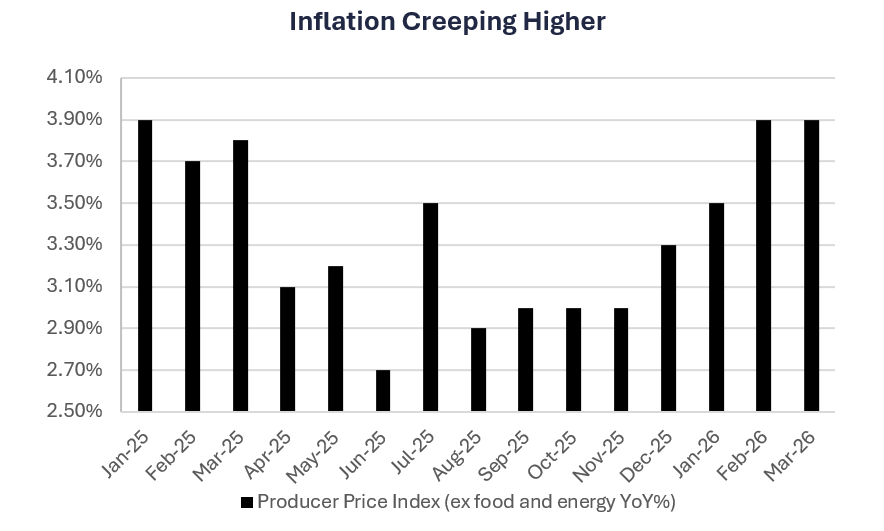
Data is as of March 2026.
Source: FactSet Research Systems, Verdence Capital Advisors
