
Weekly Investment Insights
What Failed Negotiations Mean for Markets and Economy
Key Takeaways:
- Talks end with no resolution.
- U.S. is wasting no time and taking control of the Strait.
- Will Iran turn to other sources to pressure the global economy?
- Yields likely to remain high in the near term as inflation a major risk.
- Be patient, equities should remain volatile.
What Failed Negotiations Mean for Markets and Economy
Last week marked the one year anniversary of Liberation Day. A year later, investors are contending with renewed political uncertainty with the ongoing conflict in Iran. As the war enters its sixth week, investors are trying to assess what impact the disruption in the Strait of Hormuz will have on supply chains. It was six years ago this month when COVID lockdowns froze supply chains and inflation surged. While there has been some traffic through the Strait over the weekend, it is still well below normal. As a result, investors are bracing for short term supply chain disruptions and inflation scares. In this weekly insights, we highlight products aside from oil that rely on the waterway and what we expect in the near term.
- Strait is not just oil: Roughly ~25-30% of the world’s helium goes through the Strait. Helium is used in MRI machines, semiconductor chips and many manufacturing processes. Between 20-45% of the global supply of inputs in fertilizers travels through the Strait. While only ~5% of the global aluminum supply goes through the Strait, supply is already tight.
- Signs of supply chain delays: Aside from energy, the next items most at risk are chemicals. This has broad reaching impact on many items (e.g. plastic, rubber, electronics). The March ISM Index showed delivery times rose to the highest level since 2022 so producers are waiting longer for input materials.
- Fuel costs eating into tax benefit: The Tax Foundation estimates that tax refunds are ~$100 billion higher this year due to the One Big Beautiful tax bill. However, the recent $1.20 increase in the price of a gallon of gasoline has the ability to eat away that benefit. While the personal savings rate is at a six month high, it is still below the historical average (~6%). Any supply chain disruptions can add to strain on the consumer.
- Data to start offering clues: This week we receive a range of economic data on the immediate inflation impact due to the war. Last week, we saw March manufacturing prices jump to the highest level since 2022. This week we will get service prices and the Consumer Price Index which is expected to rise 1.0% (MoM) at the headline level.
- More clues on Fed view: We will also get the FOMC Minutes from the March 18 meeting. This detailed report should offer further insight into the committee’s appetite to let inflation run hot while the war continues. At some point, the committee will need to offer their opinion on the inflation risk due to supply chain disruptions.
The Bottom Line:
As markets grow more familiar with the conflict, we have seen a solid rebound in equities. However, the next phase will be absorbing the economic data that reflects the supply disruptions, higher energy costs and inflation. We have not seen any change in earnings estimates to reflect a prolonged conflict, operational bottlenecks or that the Fed would not be cutting rates this year. This leaves the market open to additional downside so we recommend being patient until valuations factor in these risks.
LISTEN NOW: Markets With Megan
Your Economic and Market Detailed Recaps
- Services impacted by surging prices paid.
- Fed was hawkish in Minutes from March meeting.
- Inflation reflecting impact from War with Iran.
- Global equities rally on ceasefire deal.
- Inflation expectations drop with oil prices; yields fall.
- Crude oil prices drop sharply on reopening of Strait.
Weekly Economic Recap — Inflation showing up in many economic indicators; Fed on hold
The ISM Services Index fell modestly in March but remained in expansion territory for the 21st consecutive month. The weakness in overall business activity, employment and new export orders overshadowed a strong rise in prices paid, delivery times and imports.
The preliminary reading on durable goods orders for February showed orders declined due to nondefense aircraft (-28.6% MoM). When you exclude aircraft, orders rose +0.6% (MoM) led by machinery and metals.
The Minutes from the FOMC’s March meeting showed the committee saw a “strong case for two sided language on rate path.” They saw the labor market was “broadly in balance.” The Minutes also showed that “many said inflation higher for longer could call for hikes.”
Personal spending rose in February (+0.5% MoM) while personal income declined (-0.1% MoM) for the first time in nine months. As a result, the personal savings rate fell to 4.0%, the lowest in three months. In addition, real personal spending (factoring in inflation) rose 0.1% (MoM). Over the past six months, real spending has not risen more than 0.2% (MoM).
The Fed’s preferred inflation gauge (PCE Core YoY) grew 0.4% (MoM) in February, inline with expectations and matching January’s data. On a year-over-year basis, PCE is growing 3.0%.
Inflation as measured by the Consumer Price Index rose at the fastest monthly pace since 2022 (+0.9% MoM). The sharp rise in energy prices contributed to the increase at the headline level. At the core level, prices grew 0.2% (MoM) as used cars, medical care and household supplies fell. However, computer software and accessories rose on shortages for chips due to supply chain disruptions.
Weekly Market Recap — Optimism about peace talks drive stocks higher
Equities:
The MSCI AC World Index rallied for the second consecutive week and posted its best one week gain since November 2023. Equities rallied as crude oil prices dipped on optimism surrounding the temporary ceasefire between the U.S. and Iran and weekend negotiations. All the major global indices that we monitor rallied, led by the emerging markets, specifically Asia. Within the U.S., the drop in yields helped boost tech and small cap stocks.
Fixed Income:
The Bloomberg Aggregate Index rallied for the second consecutive week as oil prices dropped sharply and inflation expectations edged lower. Within the fixed income market, the biggest gainers were emerging market bonds and high yield.
Commodities/FX:
The Bloomberg Commodity Index posted its worst one week decline since April 2025. Crude oil prices dropped sharply as Iran said they would open the Strait of Hormuz as part of a ceasefire deal. Copper prices also jumped due to optimism on demand from China and a weak U.S. dollar.
WATCH NOW: Alternate View Podcast
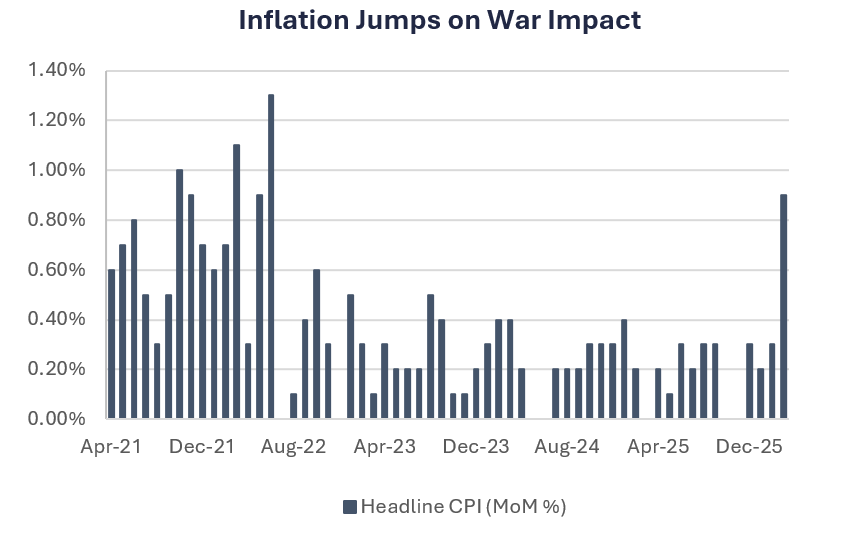
Data is as of April 2026.
Source: FactSet Research Systems, Verdence Capital Advisors
