
Weekly Investment Insights
Top Five Questions Driving Stock Markets Summer 2026
Key Takeaways:
- Strong start to 2026 but not an easy ride.
- Many unanswered questions about U.S./Iran interim deal.
- There is a strong likelihood of at least one Fed rate hike before year end.
- Earnings growth expectations are high.
- Markets may not be reflecting Fed rate hikes.
Top Five Questions on Investors’ Minds this Summer 2026
As we begin to reflect on the first half of 2026, investors have faced many different obstacles. A new Fed Chair, a war in the Middle East, the largest IPO in history, an AI spending boom and elevated inflation are all items that investors have had to manage. We acknowledge that it has been a challenging first six months to start a year as is evident by volatility, as measured by the VIX Index, jumping to the highest level since Liberation Day (April 2025) and consumer confidence making a fresh record low. In this weekly insights we address the top five questions that we see are on investors’ minds.
Will the U.S./Iran peace deal hold?
When you dig into the memorandum of understanding, it is basically a 60 day ceasefire so that both sides have time to negotiate. There are still crucial components that need to be resolved before we can say this geopolitical risk is behind us. The ongoing fighting between Israel and Lebanon, the full dismantling of Iran’s nuclear program and a fully functioning Strait of Hormuz are the most uncertain parts of the deal.
When is the relief in energy costs?
Gas prices have fallen more than 10%, while crude oil has dropped over 30%. Production and transportation take time to normalize. If the peace deal holds, we expect gas prices to continue to fall.
Will the Fed raise rates?
There will be volatility around inflation due to the rapid move in gasoline prices. However, core inflation remains sticky, economic growth is solid, and nine of 19 Fed policymakers have already penciled in at least one rate hike before year-end.
Are equities expensive?
Earnings have made up most of the total return in equities this year. Price to earnings (PE) multiple expansion has been relatively flat. From a PE basis, equities may not look expensive, but earnings are important. Currently, analysts expect 20%+ S&P 500 earnings growth in every quarter through 2026. That may be optimistic if the Fed must raise interest rates.
Will Q2 earnings season support the market rally?
Expectations are high for 2Q earnings growth with tech leading the upward move in estimates. The biggest variable will be whether the AI capex spend is starting to filter into earnings. Investors are growing impatient to see real revenue with the excessive spending.
Bottom Line
Investors have been whipsawed many times this year with the on and off again U.S./Iran peace deal and differing opinions on the long term impact of inflation. At this point we think there is a strong likelihood the Fed will need to raise interest rates at least 0.25% this year as we normalize through the negative impacts from the closing of the Strait of Hormuz. Unfortunately, we do not think this is fully priced into equity market valuations at this time and we expect volatility to accelerate. We continue to focus on the buy on weakness mentality instead of selling on strength as we are constructive about the economy and equities long run.
LISTEN NOW: Markets With Megan
Your Economic and Market Detailed Recaps
- Home builders concerned about prices.
- Retail sales beat expectations.
- Fed takes a hawkish tone at Warsh’s first meeting.
- Global equities rise on interim U.S./Iran deal.
- Bonds rally as oil price falls with inflation expectations.
- Commodities driven lower by energy.
Weekly Economic Recap — Fed Warsh takes center stage
The NAHB Housing Market Index fell in June as homebuilders grew pessimistic about the current state of the housing market. Homebuilders noted the uncertainty around the costs for building houses and regulation as a reason for the drop in confidence.
Retail sales rose more than expected in May at all levels that we monitor. At the headline level, sales rose 0.9% (MoM) led by strong gains in gasoline station sales. At the super core level (excludes gas, autos, building materials and food) sales rose 0.7% and are rising ~6% on a year over year basis. Strong furniture and internet sales led the gains.
Pending home sales rose at the fastest pace in nearly two years in May. All the major regions increased but the northeast led the gains with sales rising 8.7% (MoM).
The Federal Reserve met and with the new Fed Chairman, Kevin Warsh, left interest rates unchanged at 3.50%-3.75%. The decision was unanimous and the committee removed their easing bias language. Nine of the members expect a rate hike in 2026. Warsh announced the launch of multiple different task forces to review the Fed’s communication tools, the balance sheet, data sources they monitor, the future of productivity/AI and alternate frameworks for inflation.
Weekly Market Recap — Global equities rise on hopes for a peace deal
Equities:
The MSCI AC World Index rallied for the second consecutive week despite a more hawkish tone from the new Fed Chairman Kevin Warsh. The signing of an interim peace deal between the U.S. and Iran helped boost risk sentiment. The MSCI EAFE and MSCI Emerging Market Index outperformed U.S. equities. Within the U.S., small and midcap growth outperformed large cap growth and value.
Fixed Income:
The Bloomberg Aggregate Index rallied for the second consecutive week on hopes that easing geopolitical tensions would reduce inflation. Municipal bonds and long term Treasuries outperformed the rest of the fixed income sectors.
Commodities/FX:
The Bloomberg Commodity Index fell for the fifth consecutive week led by the ongoing drop in energy prices. Crude oil fell nearly 10% last week and deeper into bear market territory (a drop of 20% or more). Precious metals were also under pressure as safe haven demand weakened on an interim peace deal.
WATCH NOW: Alternate View Podcast
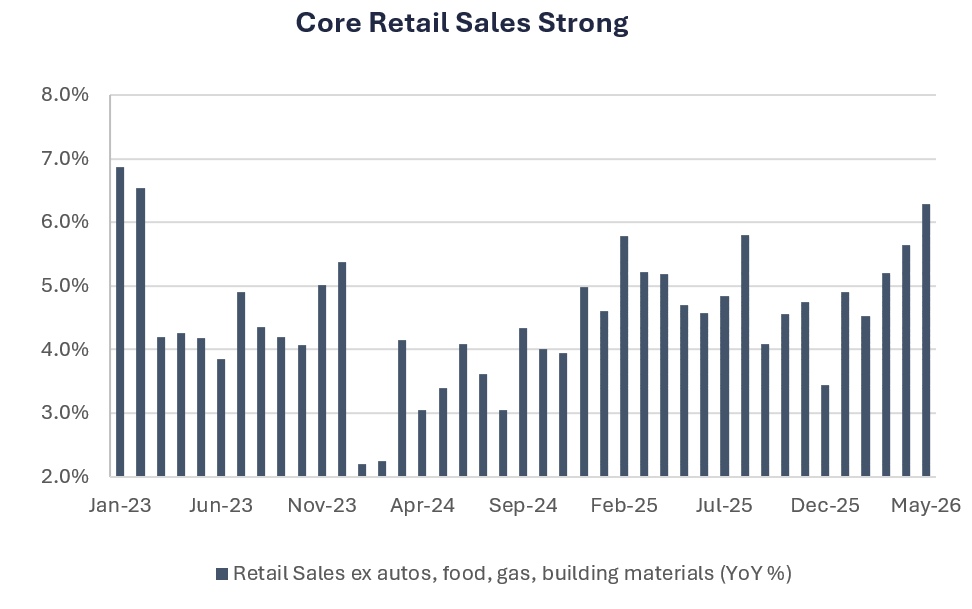
Data is as of May 2026.
Source: FactSet Research Systems, Verdence Capital Advisors
