
Weekly Investment Insights
Fed Rate Hike Outlook as Inflation Stays Stubborn
Key Takeaways:
- Inflation has not reached Fed’s target in 66 months.
- Liquidity is a factor in inflation problem.
- Wages have not been keeping pace with many household necessity items.
- Homeowners in a difficult situation to maintain their homes.
- No one wants rate hikes, but the Fed should act this week and get tough on inflation.
Breaking Down the Inflation Environment Since Before COVID
Inflation as measured by Core PCE (YoY) and Core CPI (YoY) has been above the Fed’s target (2.0%) for the past 66 consecutive months. It is difficult to say that the wait and see approach or the approach of easing rates before inflation has securely moved to the Fed’s target is working. History shows us that inflation tends to move in waves and is rarely a one and done straight down trajectory.
We realize that the Fed cannot control some of the factors that are contributing to inflation (e.g., war and elevated oil prices, supply disruptions, surging costs for the AI buildout). However, the Fed can try to control the excess liquidiy in the system that also contributes to inflation being stubborn.
For example, the money supply is growing 5.4% (YoY), the highest pace since 2022 and roughly 70% of nominal GDP. In the most recent Fed Senior Loan Officer Survey banks reported easing lending standards because competition is so strong in the public and private market not because credit quality has improved. Again, too much money moving around the banking system can created inflationary pressures. Credit spreads are near the lowest level since prior to the Great Recession. Equity markets are hovering near record highs and corporate earnings are making record highs. All of these factors contribute to excess liquidity and if not addressed the Fed will find it very difficult to achieve its 2% inflation target. In this weekly insights, we took a look at some of the key items that are necessities for households and how much they have changed since before the COVID induced inflation era (end of 2019). In addition, it is important to compare the price increase with the rise in average hourly earnings which has only been 4.3% (annualized) since December 2019.
Housing :
The median price of an existing home has increased 56% since December 2019 or ~7% annually. For homeowners the cost to maintain your home has been exceeding earnings. Homeowner insurance has been rising 4.9% (annually), housing fuel is rising ~9% (annually) and electricity is up 5.5% (annually). In addition, food is up 4.6% and water services are up 4.5% (annually). Even garbage and trash collection is rising 5.3% (annually).
Owning a car:
The cost of a new or used car has not exceeded earnings since 2019 (+3.6% annually). However, similar to housing, maintaining a vehicle is a burden. Motor vehicle repairs are growing 7% annually, auto insurance is rising 6% and motor fuel has increased 5.4% annually.
Services prices matter:
Americans spend most of their money on services not goods. That includes everything from medical care, financial, legal, lawn care, getting your hair cut. Service prices are rising over 4% annually since the end of 2019 so barely keeping up with wages.
The Bottom Line:
No one wants interest rate hikes, however we see the ongoing inflationary environment a bigger threat to the economy than interest rate hikes. We think the Fed should raise rates this week and deliver a hawkish stance on monetary policy. If they disappoint, they risk losing control of long term interest rates as investors lose confidence the Fed can control inflation for the long run.
LISTEN NOW: Markets With Megan
Your Economic and Market Detailed Recaps
- Business optimism slips.
- Inflation likely to force Fed to act.
- Consumer confidence weakens.
- Global equities decline on war and rate hike expectations.
- Bonds slammed by inflation and rise in crude oil.
- Geopolitical tensions send crude oil higher.
Weekly Economic Recap — Inflation Data Likely to Force the Fed to Act
Small business optimism as measured by the NFIB Small Business Optimism Index fell for the first time in three months in August. A weaker outlook on the economy and hiring plans led the Index lower.
Inflation as measured by the Producer Price Index rose 0.4% (MoM) in August at the headline level as energy prices continued to drive prices higher. At the core level (ex food, energy and trade), prices rose 0.3% (MoM) and are rising 4.7% on a year over year basis.
Inflation as measured by the Consumer Price Index rose in August and increased more than expected at the core level (0.3% MoM). The headline increase (+0.4% MoM) was driven by energy prices (+2.1% MoM). At the core level, shelter, airline fares and education/ communication prices led the gains.
The preliminary reading on the University of Michigan Consumer Confidence Index showed that confidence declined for the second consecutive month in September to a four month low. Confidence declined in both the current conditions and future expectations components but it was concern about the future that led the weakness.
Weekly Market Recap — Global Equities Fall on War and Rate Hike Expectations
Equities:
The MSCI AC World Index saw its worst weekly decline in the past eight weeks as the war in Iran escalated and stubborn inflation is suggesting rate hikes are ahead. The developed equity markets were the worst performing region as the ECB raised interest rates. Within the U.S., rising bond yields hampered growth stocks and small and midcap stocks.
Fixed Income:
The Bloomberg Aggregate Index posted its worst one week decline in the past 17 weeks. Crude oil pushing above $100 bbl, inflation proving problematic and fear over burgeoning deficits pushed yields higher. Municipals and Treasuries led the declines but all major fixed income sectors fell for the week.
Commodities/FX:
The Bloomberg Commodity Index rallied for the second consecutive week. Crude oil led the gains as the war with Iran intensified. Gold prices were hampered by the rise in Treasury yields and likely Fed interest rate hike.
WATCH NOW: Alternate View Podcast
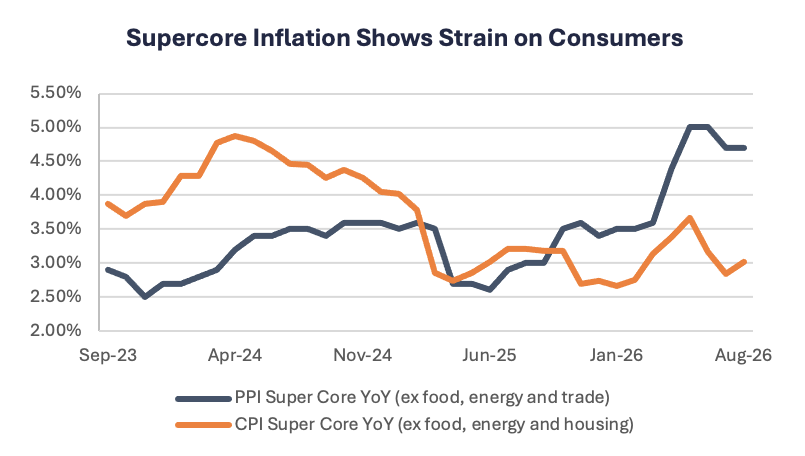
Data is as of August, 2026.
Source: FactSet Research Systems, Verdence Capital Advisors
