
Weekly Investment Insights
Volatility Continues to Challenge Euphoria
Key Takeaways:
- Negative seasonality delivers in 2026.
- Risks accelerate from many angles.
- Rotation out of U.S. gains momentum.
- Credit jitters weigh on leverage loans and high yield.
- Precious metals regain momentum.
February Market Review: Volatility Continues to Challenge Euphoria
The month of February lived up to its negative seasonal tone with the S&P 500 posting its worst monthly decline in 11 months. Increasing geopolitical tensions, credit jitters, fears of an AI overspend, weak U.S. GDP and inflation reemerging dampened sentiment. Volatility, as measured by the VIX Index, rose for the second consecutive month and is on pace for its biggest rise to start a year since the pandemic. Safe havens rallied as seen by precious metals regaining momentum and the 10-year Treasury yield dipping below 4.0%. In this weekly investment insights we offer a monthly review from an economic and asset class perspective.
- U.S. GDP disappoints: The first reading on 4Q25 U.S. GDP showed growth came in weaker than expected (+1.4% vs. +2.8% QoQ). The longest government shutdown in history contributed to the slowdown in growth.
- Fed puts hikes on the table: The Minutes from the January FOMC meeting showed that some members are willing to hike rates if inflation does not move closer to their target (2.0%).
- Inflation sticky: The Fed’s preferred inflation indicator (PCE Core YoY) showed that inflation rose 0.4% (MoM) in December and is rising 3.0% year over year.
- Manufacturing accelerates. The ISM Manufacturing Index expanded (a level above 50) for the first time in 11 months.
- Job openings fall sharply. Job openings fell to the lowest level since Sept. ‘20. As a result, there are now almost one million more Americans unemployed than there are job openings.
Global Equities- International shines.
The MSCI AC World Index rallied for the third consecutive month but international equities outperformed U.S. equities.
- U.S. lags: The S&P 500 and NASDAQ both declined in February. However, the Russell 2000 and Russell 2500 rallied.
- Rotation gains momentum: The rotation from U.S. tech to other tech countries helped Korea and Taiwan to lead the global gains. In addition, Japan was boosted by strong snap election results.
Fixed income – Credit jitters emerge.
Fears of credit defaults due to AI disruptors caused Treasuries to outperform credit.
- Long term Treasuries lead: Ten and 30 year Treasuries were the best performing portion of fixed income as a flight to safety drove yields lower.
- Loans scrutinized: Leverage loans dropped for the second month as fears of defaults in the software space rose.
Commodities – Metals regain momentum.
The Bloomberg Commodity Index rallied for the second month led by silver.
- Metals rebound as geopolitical tensions and volatility rise: Silver and gold rebounded as risk sentiment soured.
- Grains jump on weather: Warm and dry weather boosted the price of wheat and soybeans.
- Energy falls as natural gas plummets: Warmer weather and increased supply sent natural gas prices down by the most since January 2023.
LISTEN NOW: Markets With Megan
Your Economic and Market Detailed Recaps
- Home prices continue to rise.
- Consumer confidence jumps on future expectations.
- Inflation at the producer level remains sticky.
- Global equities rally but U.S. is left behind.
- Private credit fears spill into public corporate debt.
- Commodities rally as geopolitical tensions and demand rise.
Weekly Economic Recap — Confidence rebounds but inflation remains a concern
Home prices as measured by the S&P Cotality Index rose for the fifth consecutive month in December. Of the 20 cities monitored, 19 cities saw prices rise for the month (Denver was the only city to see prices fall). The strength was led by gains in San Diego, Chicago, Charlotte and Tampa.
Consumer confidence as measured by the Conference Board rose by the most in seven months in February. Confidence in future economic conditions led the gains as confidence about job prospects, business expectations and income rose.
Inflation as measured by the Producer Price Index came in stronger than expected in January. While goods producer prices dropped, prices in the service sector pushed the Index higher, specifically in trade.
Of the five regional manufacturing surveys we received last week, three of them (Chicago, Dallas, and Kansas City) saw manufacturing activity improve. Philadelphia saw the largest drop led by weakness in new orders and sales.
Weekly Market Recap — International Equities Lead While U.S. Slides
Equities:
The MSCI AC World Index rose for the third consecutive week but the gains were concentrated outside of the U.S. The S&P 500 fell for the third time in the past four weeks as geopolitical tensions accelerated, inflation fears emerged on a hotter than expected Producer Price Index and financials slipped on private credit concerns. Asia and Japan led the gains for the week.
Fixed Income:
The Bloomberg Aggregate Index rose for the third time in the past four weeks as geopolitical tensions fueled the demand for the safety of Treasuries. High yield credit saw its worst one week decline in three months as fears about private credit spilled into public corporate debt.
Commodities/FX:
The Bloomberg Commodity Index rallied for the second consecutive week led by gains in metals (precious and industrial) and grains. Copper rose on a better demand outlook while gold rallied on heightened geopolitical tensions.
WATCH NOW: Alternate View Podcast
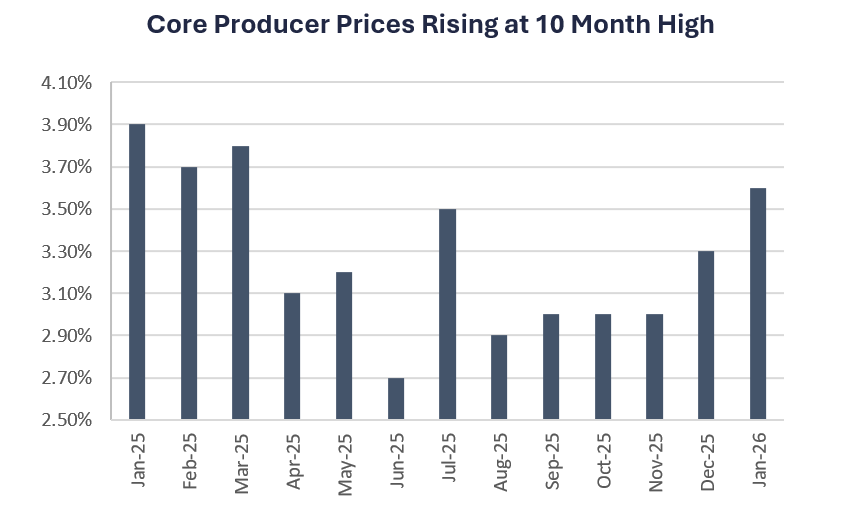
Data is as of January 2026.
Source: FactSet Research Systems, Verdence Capital Advisors
